Proposed MA-MFLB changes: drains, ERVs and what test reports would show
November 17, 2026
ANSI/AARST MA-MFLB is the protocol for measuring radon in multifamily, school, commercial and multi-use buildings. It sets where test devices go, how the building runs during a test and what the report says.
The AARST Consortium on National Standards, sponsored by the American Association of Radon Scientists and Technologists (AARST), has published proposed changes for public review (addenda 26-9). Comments are due November 23, 2026. None of it is in force, and the text can change after review.
Five proposals change what happens on site or what ends up in the report: drains, ERVs, a test conditions log, continuous monitor data and client data authorizations.
1. Devices would stay 3 feet from drains and openings to soil
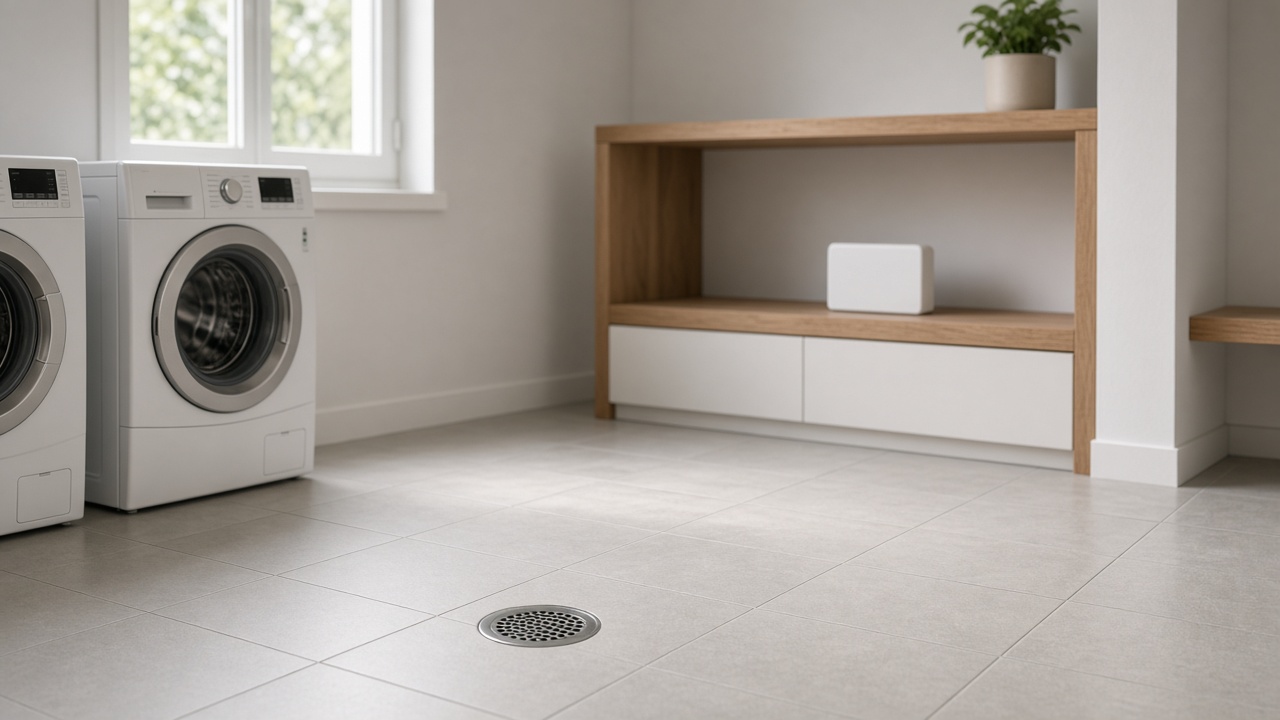
The standard already keeps test devices at least 3 feet from exterior doors and windows, 20 inches above the floor, 1 foot from exterior walls and 1 foot below the ceiling. The proposal adds at least 3 feet (90 cm) from large openings to soil and from any plumbing drain or floor drain (Table 3.8).
In apartment buildings, that reaches laundry rooms, utility rooms, mechanical rooms and ground-floor units with floor drains.
2. ERVs, HRVs and economizers could run during a test only at their lowest normal setting
Short-term tests used for mitigation decisions need closed-building conditions: windows and exterior doors closed, heating and cooling at normal occupied settings. Today's table says equipment that adds outdoor air for comfort or energy savings is "set to the lowest seasonal ventilation."
The proposal ties that to the lowest ventilation rate the system runs at most of the year, and adds that every thermostat in the building be at a normal occupiable temperature (Tables 4-A and 4-C). It names economizers, energy recovery ventilators (ERVs) and heat recovery ventilators (HRVs). AARST's stated concern is equipment temporarily adding outdoor air, which isn't representative of average occupied conditions.
On buildings with ERVs, including green-certified ones, facilities staff would need to know the normal setting before the test.
3. Test reports would carry a log of conditions during the test
The proposal adds an example test event log (Table 8.2.3-b) for tests of 90 days or less. For any logged condition that may cause a result to not reflect what residents breathe, the summary report would include an advisory and a description. The log records would go in the report or to the client on request.
The log covers:
- A unit or part of the building not operated under occupied operating conditions
- An ERV or HRV operating, and at what setting
- Closable crawl space vents open that would be closed more than 50% of the year
- Window air conditioners without closed outside air dampers, or evaporative coolers running
- Sub-slab return ducts observed
- Unusually severe weather
- Closed-building conditions or normal temperatures not kept
- Moved devices, broken tamper seals, or a non-interference agreement not signed
4. Continuous monitor reports would include hourly data and an expiration date
For continuous radon monitors, the proposal would require hourly data in the test report. Today it can be in the report or provided to the client on request.
It would also replace the calibration date with the expiration date, one year after the monitor's most recent calibration. And where hours aren't used in the average, the report would have to say which hours and why (8.4.2.1).
For lenders and environmental professionals (EPs) reading these reports, that makes two quick checks: is the calibration current, and is any excluded data explained?
5. Client data authorization would change from "shall" to "should"
Today the client "shall be requested in writing" to confirm who may receive test data and when. The proposal changes "shall" to "should." AARST says the revision removes a minimum requirement but not related legal obligations.
Owners who care about who sees results (residents, lenders, buyers) should still put it in writing with their testing firm.
What to do now
Nothing changes on current tests. MA-MFLB-2023 stands until AARST publishes final addenda.
Ask your testing firm how it would handle drains and ERVs on your property.
If it affects you, comment through AARST's public review page by November 23, 2026.
Request a quoteFAQ
Are these changes in effect?
No. They are proposed addenda in public review. The current MA-MFLB-2023 text applies until AARST publishes final addenda.
When is the comment deadline?
November 23, 2026, through the AARST Consortium's public review page.
Can an ERV run during a radon test?
Under the proposal, yes, if it's set to the lowest ventilation rate it runs at most of the year and all thermostats are at normal occupiable temperatures.
How far should a radon detector be from a floor drain?
The proposal sets at least 3 feet (90 cm) from large openings to soil and from any plumbing or floor drain.
What would a continuous monitor report have to include?
Under the proposal, hourly data, the calibration expiration date (one year after the most recent calibration), and a statement of any hours not used in the average and why.